2.7 bn in Asia-Pacific lifted out of water security; funding shortfall remains a concern
The Asia-Pacific region has made robust gains in improving water security over the past 12 years, lifting more than 60 per cent of the region’s population, from extreme water insecurity but accelerating environmental decline and a major financing gap pose serious risks to these hard-won gains, a new report by the Asian Development Bank has warned.
As many as 2.7 billion people in Asia and the Pacific have become water secure since 2013 and now have access to basic water and sanitation or are safer from floods and droughts, the Asian Water Development Outlook (AWDO) 2025 said.
But ecosystem decline, climate risks, and funding shortfalls for water investments threaten to plunge billions back into water insecurity. Wetlands, rivers, aquifers, and forests that sustain long-term water security are deteriorating fast. Extreme weather events such as storm surges, rising sea levels, and saltwater intrusion threaten a region which already accounts for 41 per cent of the world’s floods.
The AWDO estimates that $4 trillion through 2040, or $250 billion a year, is needed to meet the region’s water, sanitation, and hygiene (WASH) needs alone.
Governments, the private sector, and development partners must work together to implement policy reforms that make water services more efficient and sustainable, bridge the investment gap with smarter finance, strengthen governance to empower local institutions, and support social inclusion.
“Asia’s water story is a tale of two realities, with monumental achievements on water security coupled with rising risks that could undermine this progress”, said ADB Senior Director for Water and Urban Development Norio Saito.
“Without water security, there is no development. This report shows we need to act urgently to restore ecosystem health, strengthen resilience, improve water governance, and deploy innovative finance to deliver long-term water security—especially for the neediest communities”.
The AWDO assesses water security through five dimensions: Rural household water security & urban water security – access to clean water and sanitation for people living in villages and cities; Economic water security – the availability of water for key economic sectors such as agriculture; Environmental water security – the state of rivers and other natural ecosystems; and water-related disaster security – protection measures against droughts, floods, and other water-related disasters.
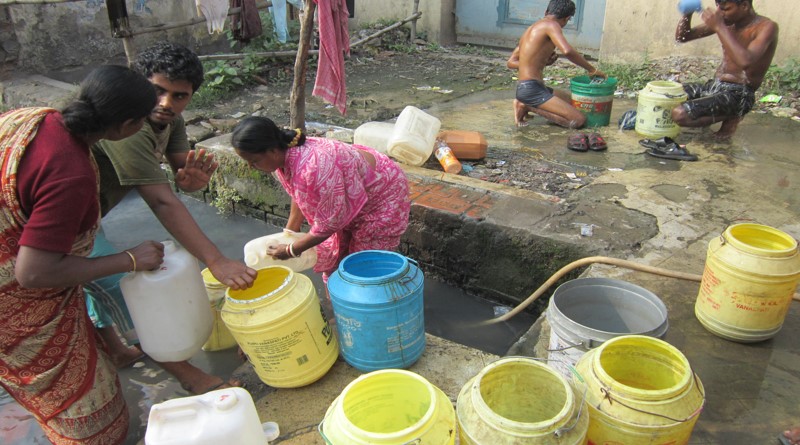
The region’s steady improvement over the past 12 years is starkly demonstrated in rural India, where 840 million people now have better WASH services, due chiefly to government programs. In the People’s Republic of China, government investments in flood control, rainfall radar systems, and emergency response have significantly enhanced resilience to water-related disasters.
According to the report, South Asia has experienced steady, moderate improvement in overall water security between 2013 and 2025. Countries like Nepal, Sri Lanka, India, and Bangladesh showed notable gains, contributing to the region’s overall progress. The regional average for economic water security (KD2)rose, reflecting success primarily in agricultural productivity and food security in countries like Bangladesh and India.
Bhutan, India, Sri Lanka, Bangladesh, and Maldives all achieved moderate KD2 gains, often linked to economic growth and improvements in the energy sector enabling better water infrastructure.
The report underlines that progress can be sustained if nature is protected and integrated into water systems through national river health monitoring, stronger pollution controls, and better watershed protection. Stronger governance systems that prioritize prevention will improve climate resilience, and water systems will be more effective if subnational bodies are given the resources and authority to manage them. Efforts must be inclusive—engaging women and young people—if investments are to succeed.
Current spending on WASH infrastructure covers less than 40 per cent of the estimated $250 billion needed every year, leaving an annual shortfall of more than $150 billion. Closing the gap requires deploying finances in smarter ways, including through blended finance that pools public and private resources to reduce project risk and mobilize private capital. Improving the efficiency and financial sustainability of the water sector can also attract private investment, said the report.
This year’s AWDO was produced in partnership with the University of Oxford, the International Water Management Institute, the University of Queensland, the International Center for Water Hazards and Risk Management, the Global Water Partnership, the International Water Centre, Griffith University, and the IHE Delft Institute for Water Education.