Artificial floating wetlands offer sustainable, cost-effective water treatment
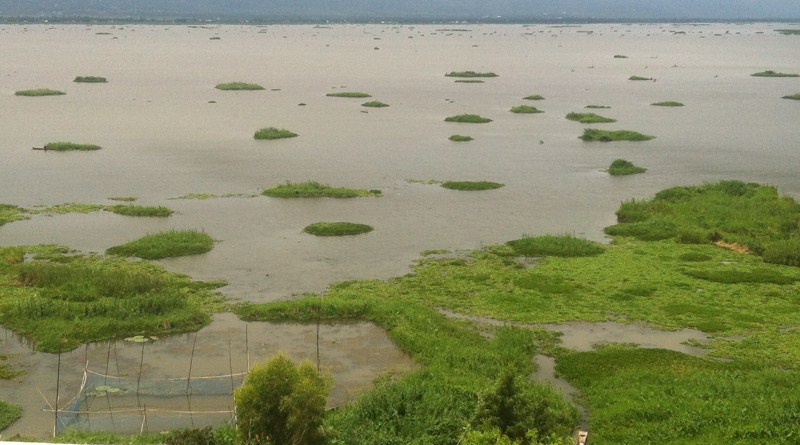
As nature-based water treatment solutions gain acceptance across the world, a new international study has endorsed artificial floating wetlands as a sustainable and cost-effective solution for improving water quality in rivers, lakes and wastewater systems.
Constructed floating wetlands (CFWs) are a somewhat recent innovation for both stormwater and wastewater treatment and help in improving water quality while reducing nutrients and other organic pollutants levels that accumulate in plant tissues.
A team of researchers, led by scientists from Australia’s national science agency CSIRO and the University of South Australia, analysed 11 international constructed floating wetlands (CFW) projects in Australia, Pakistan, Canada and the USA.
Artificial or constructed floating wetlands involve planting wetland vegetation on floating rafts, mimicking a natural ecosystem that removes nutrients, sediments and other pollutants from the host water body.
The development of constructed floating wetlands as a nature-based solution for water treatment has progressed over the last 25 years. However, full-scale CFW adoption remains relatively limited due in part to the uncertainty regarding the costs of CFWs in terms of capital and operational expenditure (CAPEX and OPEX) and treatment capacity.
The researchers found that capital costs for floating wetlands ranged from as little as A$22 per square meter, to more than A$3,800 per square meter, depending on design, location and purpose. Operating costs varied from A$0.76 to A$274 per square meter each year.
The findings will help councils, utilities and water managers better understand the economic feasibility of floating wetlands compared to conventional treatment systems which use physical, chemical and biological processes, said CSIRO Research Engineer and UniSA Adjunct Research Fellow Dr John Awad.
“Floating wetlands mimic the functions of natural ecosystems, filtering nutrients and pollutants through plant roots and microbial communities”.
“But until now, there’s been limited data on what they actually cost to build, maintain and operate at scale. Our study shows that while costs vary, floating wetlands can be competitive with other engineering treatment options, especially for nitrogen removal.”
On average, the cost of removing nitrogen was between A$15 and A$183 per kilogram — consistently cheaper than removing phosphorus, which ranged from $A23 to A$4,979 per kilogram.
“Scale matters,” said Dr Awad. “Larger wetlands reduced the cost per kilogram of nutrients removed, making them more economical over time. Climate also plays a role. Wetlands in warmer regions had longer growing seasons and higher pollutant removal rates.”
Floating wetlands are increasingly being trialed to treat domestic wastewater, stormwater and polluted urban rivers.
According to UniSA Professor Simon Beecham, the technology has added advantages beyond water quality.
“Floating wetlands can be retrofitted into existing lakes and stormwater ponds without the need for costly land acquisition. They also provide habitat for birds and aquatic life, improve urban amenity, and may even contribute to carbon sequestration”, said Professor Beecham.
The research team highlighted significant cost differences between projects in developed and developing countries. For example, wetlands built in Pakistan cost just A$13–$20 per square meter — a fraction of the expense in Australia and North America—due to lower labor and material costs.
“Understanding these variations helps governments and planners adapt the technology to local conditions,” said Dr Awad.
“It also shows that floating wetlands could be a particularly valuable option in low- and middle-income countries, where affordable, low-energy treatment systems are urgently needed.”
The researchers said floating wetlands are not a silver bullet but should be considered as part of a broader suite of water treatment options.