
Major river deltas sinking faster than sea-level rise
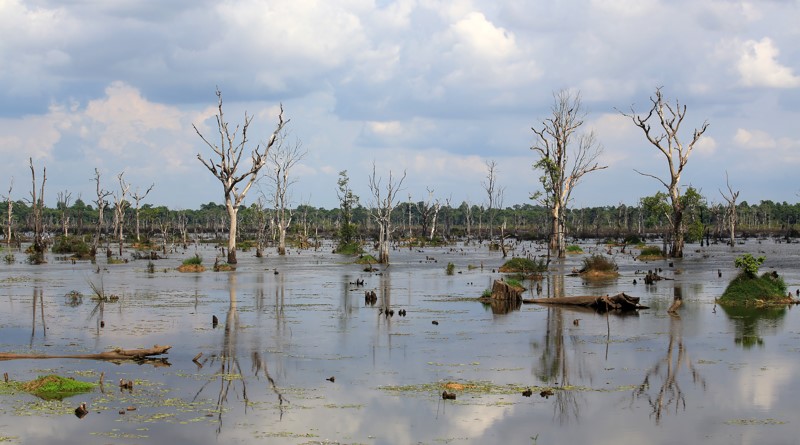
River deltas sustain dense human populations and major economic centres, but groundwater withdrawal, reduced river sediment supply and urban expansion are now threatening these vital ecosystems globally.
Many of the world’s major river deltas are sinking faster than sea levels are rising, potentially affecting hundreds of millions of people in these regions, a new research study led by scientists from Virginia Tech, has warned.
The research provides the first high-resolution, delta-wide assessment of elevation loss across 40 river deltas worldwide. The findings show that in nearly every river delta examined, at least some portion is sinking faster than the sea is rising.
Sinking land, or subsidence, already exceeds local sea-level rise in 18 of the 40 deltas, heightening near-term flood risk for more than 236 million people.
The researchers suggest the need for targeted interventions addressing subsidence as an immediate and localized challenge, in parallel with broader efforts to mitigate and adapt to climate change-driven global sea-level rise.
Using advanced satellite radar technology, the team – overseen by Virginia Tech geoscientists Manoochehr Shirzaei and Susanna Werth and led by former Virginia Tech graduate student Leonard Ohenhen, now an assistant professor at the University of California, Irvine – created a map of surface elevation change across river deltas in five continents. Each pixel of the high-resolution map corresponds to 75 square meters of the surface.
Deltas experiencing concerning rates of elevation loss include the Mekong, Nile, Chao Phraya, Ganges–Brahmaputra, Mississippi, and Yellow River systems.
“In many places, groundwater extraction, sediment starvation, and rapid urbanization are causing land to sink much faster than previously recognized”, said Ohenhen.
Some regions are sinking at more than twice the current global rate of sea-level rise.
Among all deltas, the study found that at least 35 per cent of the area is sinking, and in 38 deltas (excluding Neva and Fraser), more than 50 per cent of the delta area is sinking. Of the 40 deltas, 19 show widespread subsidence patterns, with greater than 90 per cent of the delta area affected by subsidence (for example, Mississippi, Niger, Nile, Rhine–Meuse, Po, Vistula, Brahmani, Mahanadi, Ganges–Brahmaputra, Chao Phraya, Mekong and Brantas deltas).
“Our results show that subsidence isn’t a distant future problem — it is happening now, at scales that exceed climate-driven sea-level rise in many deltas”, said Shirzaei, co-author and director of Virginia Tech’s Earth Observation and Innovation Lab.
Groundwater depletion emerged as the strongest overall predictor of delta sinking, though the dominant driver varies regionally.
“When groundwater is over-pumped or sediments fail to reach the coast, the land surface drops. These processes are directly linked to human decisions, which means the solutions also lie within our control”, said Werth, who co-led the groundwater analysis.