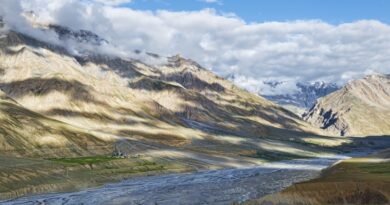
World on verge of entering new era of ‘water bankruptcy’
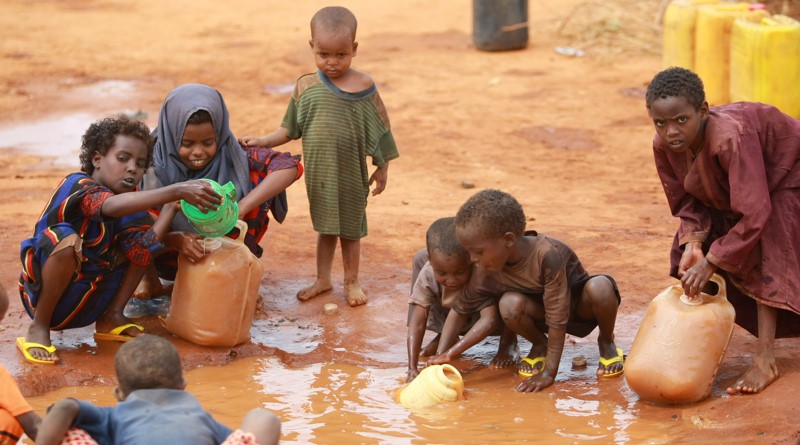
Against a backdrop of chronic groundwater depletion, water over-allocation, land and soil degradation, deforestation, and pollution, the world is on the verge of entering into a new era of ‘water bankruptcy’ with rivers, lakes and aquifers depleting faster than nature can replenish them, with climate change compounding the problems, a new United Nations report has warned.
The world is now using so much fresh water that many regions no longer able to bounce back from frequent water shortages. The report by the UN University Institute for Water, Environment and Health (UNU-INWEH), launched earlier this week, states that familiar terms ‘water stressed’ and ‘water crisis’ fail to reflect today’s reality in many places: a post-crisis condition marked by irreversible losses of natural water capital and an inability to bounce back to historic baselines.
Decades of overuse, pollution, environmental destruction and climate pressure had pushed many water systems so beyond the point of recovery that a new classification was required. “Water stress and water crisis are no longer sufficient descriptions of the world’s new water realities,” the report – ‘Global Water Bankruptcy: Living Beyond Our Hydrological Means in the Post-Crisis Era’, said.
These terms were “framed as alerts about a future that could still be avoided” when the world had already moved into a “new phase”. The report proposes the alternative term ‘water bankruptcy’ — a state in which long-term water use exceeds resupply and damages nature so severely that previous levels cannot realistically be restored.
Drawing on global datasets and recent scientific evidence, the report presents a stark statistical overview of trends, the overwhelming majority caused by humans: 50 per cent of large lakes worldwide have lost water since the early 1990s (with 25 per cent of humanity directly dependent on those lakes); 50 per cent of global domestic water is now derived from groundwater and over 40 per cent is irrigation water being drawn from aquifers being steadily drained. Also, 70 per cent of major aquifers worldwide are showing long-term decline while 30 per cent global glacier mass has been lost in several locations since 1970, with entire low- and mid-latitude mountain ranges expected to lose functional glaciers altogether within decades.
The report also states that dozens of major rivers now fail to reach the sea for parts of the year even as for over 50 years, many river basins and aquifers have been overdrawing their accounts. Alarmingly, 75 per cent of humanity now lives in countries classified as water-insecure or critically water-insecure while 2 billion people are living on sinking ground. As many as 4 billion people are now facing severe water scarcity at least one month every year.
“This report tells an uncomfortable truth: many regions are living beyond their hydrological means, and many critical water systems are already bankrupt”, said lead author and UNU-INWEH director Kaveh Madani.
Expressed in financial terms, the report says many societies have not only overspent their annual renewable water “income” from rivers, soils, and snowpack, they have depleted long-term “savings” in aquifers, glaciers, wetlands, and other natural reservoirs.
This has resulted in a growing list of compacted aquifers, subsided land in deltas and coastal cities, vanished lakes and wetlands, and irreversibly lost biodiversity.
“As with global climate change or pandemics, a declaration of global water bankruptcy does not imply uniform impact everywhere, but that enough systems across regions and income levels have become insolvent and crossed irreversible thresholds to constitute a planetary-scale condition”, said Madani.
“Water bankruptcy is also global because its consequences travel. Agriculture accounts for the vast majority of freshwater use, and food systems are tightly interconnected through trade and prices. When water scarcity undermines farming in one region, the effects ripple through global markets, political stability, and food security elsewhere. This makes water bankruptcy not a series of isolated local crises, but a shared global risk that demands a new type of response: Bankruptcy management, not crisis management”, he added.
The report warns that the current global water agenda – largely focused on drinking water, sanitation, and incremental efficiency improvements – is no longer fit for purpose in many places and calls for a new global water agenda that:
- Formally recognizes the state of water bankruptcy
- Recognizes water as both a constraint and an opportunity for meeting climate, biodiversity, and land commitments
- Elevates water issues in climate, biodiversity, and desertification negotiations, development finance, and peacebuilding processes
- Embeds water-bankruptcy monitoring in global frameworks, using Earth observation, AI, and integrated modelling
- Uses water as a catalyst to accelerate cooperation between the UN Member States
In practical terms, managing water bankruptcy requires governments to focus on the following priorities:
- Prevent further irreversible damage such as wetland loss, destructive groundwater depletion, and uncontrolled pollution
- Rebalance rights, claims, and expectations to match degraded carrying capacity
- Support just transitions for communities whose livelihoods must change
- Transform water-intensive sectors, including agriculture and industry, through crop shifts, irrigation reforms, and more efficient urban systems
- Build institutions for continuous adaptation, with monitoring systems linked to threshold-based management