World still not on track to meet 2030 target on WASH access
There has been major progress in access to water, sanitation and hygiene services in the past decade, but nearly one in four people around the world still lack safely managed drinking water. While many high-income countries have already achieved universal access to drinking water, the pace of access in lower-middle-income and low-income countries would need to be stepped up, a recent WHO-UNICEF report has revealed.
Between 2015 and 2024, 961 million people gained access to safely managed drinking water services, raising global coverage from 68 per cent to 74 per cent. However, 2.1 billion people still lacked safely managed drinking water, 1.5 billion had basic services, 287 million had limited services, 302 million relied on unimproved sources, and 106 million collected water directly from surface water sources such as rivers and lakes, the report on progress in household drinking water, sanitation and hygiene during 2000-2024 said.
The estimates for safely managed services are available for 160 countries across six out of eight SDG regions. The number of people using surface water has decreased by 61 million over the same period.
The report underlined the fact that with just five years remaining for the 2030 deadline for the SDGs, the world is still not on track to achieve universal coverage of basic WASH services even as universal coverage of safely managed water and sanitation services is increasingly out of reach.
Behind these global figures, significant disparities in national progress remain. While many high-income countries had already achieved universal access (>99 per cent), others lag far behind. In 2024, 89 countries had already achieved universal access to at least basic drinking water. Thirty-one countries had achieved universal access to safely managed drinking water, and if current trends continue 38 will have reached universal access by 2030.
However, the report, based on WHO/UNICEF’s Joint Monitoring Program (JMP), noted that the data reveal stark inequalities: To achieve universal access to basic WASH services (SDG 1.4), lower-middle-income countries need to double current rates of progress and low-income countries would require a dramatic sevenfold increase in basic water. In fragile contexts, coverage of safely managed drinking water is 38 percentage points lower than in other countries.
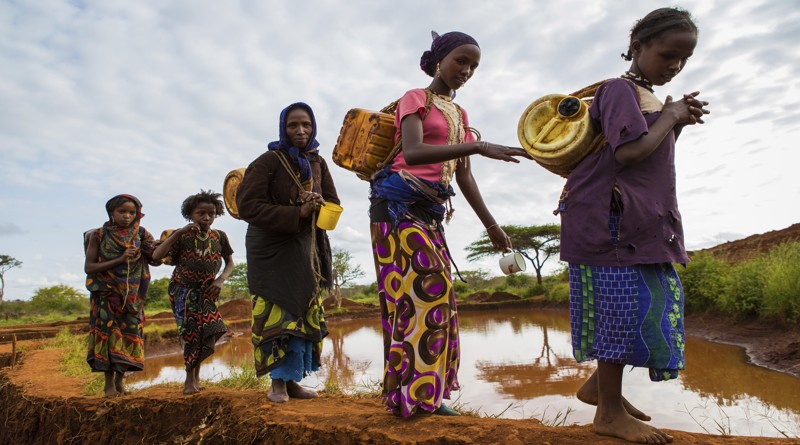
“Individual-level data on time spent collecting water highlight inequalities between women and girls and men and boys. The burden of water collection continued to fall disproportionately on women and girls, especially in settings where water is not available on premises. Improving the accessibility of drinking water is a well-established priority given that women and girls are primarily responsible for domestic chores in many countries”.
“Subnational data show that WASH service levels often vary widely between rural and urban, subnational regions, richest and poorest, and ethnic groups. Emerging data on the dimensions of inequality show WASH service levels also vary between communities with and without access to roads, between minority ethnic and indigenous groups and the general population, and between individuals with and without functional disabilities”.
According to the report, two out of five people still lacked safely managed sanitation.
Between 2015 and 2024, 1.2 billion people gained access to safely managed sanitation services, with global coverage increasing from 48 per cent to 58 per cent. In rural areas, coverage rose from 36 per cent to 49 per cent, and in urban areas, from 59 per cent to 66 per cent. The number of people practising open defecation has dropped by 429 million and in urban areas it has been eliminated (<1 per cent).
However, as of 2024, 3.4 billion people still lack safely managed sanitation services, 1.9 billion have only basic services, 560 million have limited services, 555 million use unimproved facilities, and 354 million continue to practise open defecation. The estimates of safely managed services are available for 145 countries across all eight SDG regions.
The report underlined the fact that with just five years remaining for the 2030 deadline for the SDGs, the world is still not on track to achieve universal coverage of basic WASH services even as universal coverage of safely managed water and sanitation services is increasingly out of reach.