Central Asia’s melting glaciers may threaten future water security
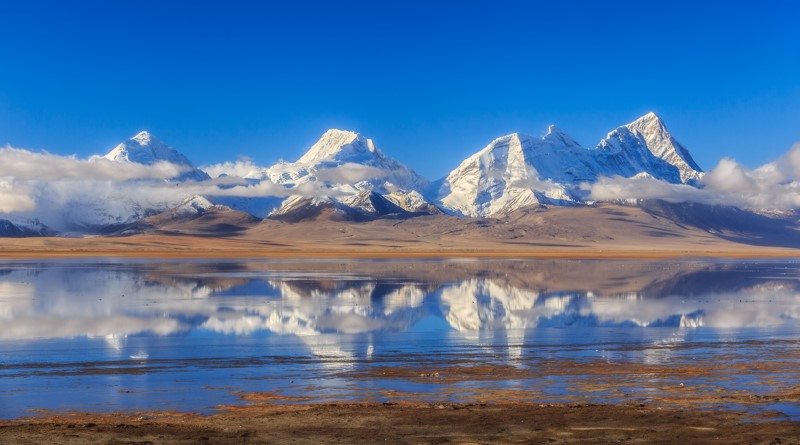
Glaciers in Central Asia, a critical water source for millions of people living downstream in arid regions, experienced their most extreme mass-loss year on record in 2025, a new international study has revealed.
Ironically, the year 2025 has also been declared as the International Year of Glaciers’ Preservation by the United Nations while 21st March of each year has been declared as the World Day for Glaciers beginning from 2025.
The study, led by Dr Lander Van Tricht from Vrije Universiteit Brussel (VUB) and ETH Zürich, used field observations from 16 glaciers across the Tien Shan and Pamir mountains, combined with regional glacier modeling. It found that glaciers in Central Asia lost around 30 km³ of ice in a single year, equivalent to nearly two per cent of the region’s remaining glacier volume. For comparison, this corresponds to roughly 30 per cent of all glacier ice that still remains today in the European Alps.
The 2025 glacier mass-balance year in Central Asia was driven by exceptionally warm conditions, with both spring and summer air temperatures far exceeding the 1991–2020 mean. These anomalies initiated earlier melt onset, intensified melt rates, and prolonged the ablation season across the region. Although accumulation was close to average, elevated temperatures caused a substantial fraction of precipitation to fall as rain rather than snow during the critical spring and summer months, even at high elevations.
In addition, snowfall events that temporarily slow melt were markedly less frequent, allowing snow- and ice melt to proceed largely uninterrupted, the study noted.
Central Asian glaciers are a critical water lifeline. During the dry summer months, glacier meltwater sustains rivers that support agriculture, hydropower production, ecosystems and drinking water supplies across countries such as Kyrgyzstan, Tajikistan, Uzbekistan and Kazakhstan.
“Glaciers in Central Asia act as natural water towers,” Van Tricht said. “As glaciers shrink, meltwater can temporarily increase, but eventually runoff declines as less ice remains. This raises major concerns for long-term water security in the region.”
The strong dependence on these shared water resources, combined with their unequal distribution between countries, already contributes to recurring tensions and so-called water conflicts in Central Asia.
“2025 stands out as an exceptional year because the extreme losses occurred almost everywhere across Central Asia simultaneously. Nine of the 16 monitored glaciers experienced their most negative mass balance ever observed, while many others ranked among their worst years on record.”
The strongest losses occurred in the western Pamir and western Tien Shan, where some glaciers lost between two and four per cent of their total ice volume in a single year. Regional modeling further indicates that 64 per cent of all glaciers experienced their most negative year since at least 1991.
The researchers also show that the 2025 event is part of a broader global pattern of recent record-breaking glacier melt years, following extreme losses previously observed in, among others, the European Alps and the Pyrenees (2022), western North America (2023), and Svalbard (2024).
“In the Alps, extreme glacier melt is often linked to short but intense heat waves,” Van Tricht added. “In Central Asia, however, the 2025 event was driven by persistently warm conditions from spring until late summer, combined with very limited snowfall during the melt season.”
Central Asian glaciers are becoming increasingly vulnerable as warming temperatures not only enhance melting, but also reduce the frequency of snowfall events that would normally protect glaciers during summer.
“We cannot prevent glaciers from responding to climate warming,” Van Tricht said. “But sustained glacier monitoring and improved modeling are essential to better understand future water availability and the impacts on downstream communities.”
Although 2025 was the most extreme glacier melt year ever recorded in Central Asia, the researchers warn that such conditions could increasingly become the new normal in a warming climate.