
Tropical rivers facing sustained oxygen loss due to climate warming
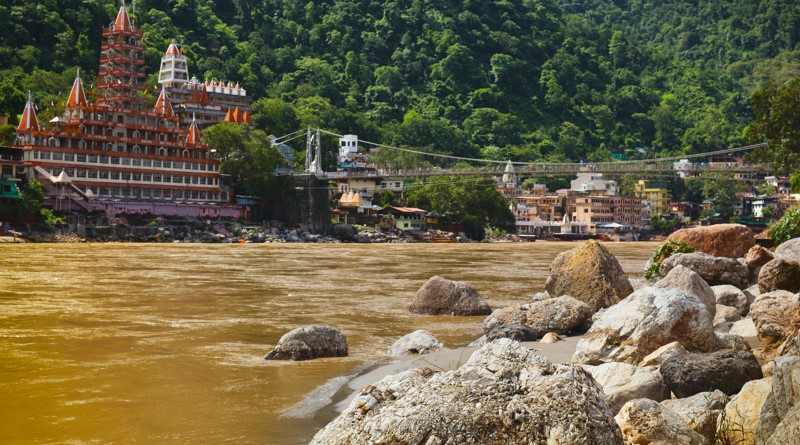
Global rivers are undergoing widespread and sustained deoxygenation, or sustained oxygen loss, driven by climate warming, with tropical rivers, including the Ganga in India, emerging as the most vulnerable ecosystems, a new study by a team of Chinese scientists has warned.
The most severe deoxygenation occurred in tropical rivers (between 20°S and 20°N), such as those in India, said the study. This contradicts prior expectations that high-latitude rivers, which face amplified climate warming, would be the primary deoxygenation hotspots.
Low oxygen levels coupled with faster deoxygenation make tropical rivers more vulnerable to hypoxia events, the study led by Professor Shi Kun from the Nanjing Institute of Geography and Limnology (NIGLAS) of the Chinese Academy of Sciences said.
Oxygen is a fundamental foundation of river ecosystems, sustaining ecological health, supporting aquatic organisms, and regulating biogeochemical cycles. Its decline poses threats to river biodiversity.
To investigate long-term trends in river dissolved oxygen, the team employed a machine-learning stacking algorithm to analyze data from 21,439 river reaches across the globe over a nearly 40-year period (1985–2023).
River ecosystems are losing oxygen at a rate of -0.045 mg L-1 decade-1, with 78.8 per cent of the studied rivers experiencing deoxygenation, the study underlined.
The team further quantified the impacts of flow regimes and dam impoundment on river deoxygenation. Results indicate that both low- and high-flow conditions can partially mitigate river deoxygenation, leading to an 18.6 per cent lower deoxygenation rate in low-flow conditions compared with normal conditions. On the other hand, high-flow conditions led to a seven per cent lower deoxygenation rate compared with normal-flow conditions, according to an official statement.
Furthermore, dam impoundment also altered deoxygenation in its impoundment area: negative in shallow reservoirs but positive in deep reservoirs. That is to say, dam impoundment can accelerate deoxygenation in shallow reservoirs, but mitigate deoxygenation in deep reservoirs.
Further analysis identified climate-driven declines in oxygen solubility as the major cause of river deoxygenation, accounting for 62.7 per cent of the observed decline. Ecosystem metabolism—reflected by factors such as temperature, light, and flow—was responsible for 12% of the deoxygenation.
Heat wave events were also specifically analyzed, with their impacts on river deoxygenation quantitatively assessed. The results show that heat waves were responsible for 22.7 per cent of global river deoxygenation, with an increase of 0.01 mg L-1 decade-1 in the deoxygenation rate, relative to conditions under average climatological temperatures.
These findings underscore the negative consequences of climate warming on lotic ecosystems and identify tropical rivers as the ecosystems in greatest need of effective action and mitigation strategies to combat deoxygenation crises. The study provides a systematic baseline for policymakers in formulating measures to mitigate river deoxygenation worldwide.