Shifting rainfall patterns to hit water resources, agriculture
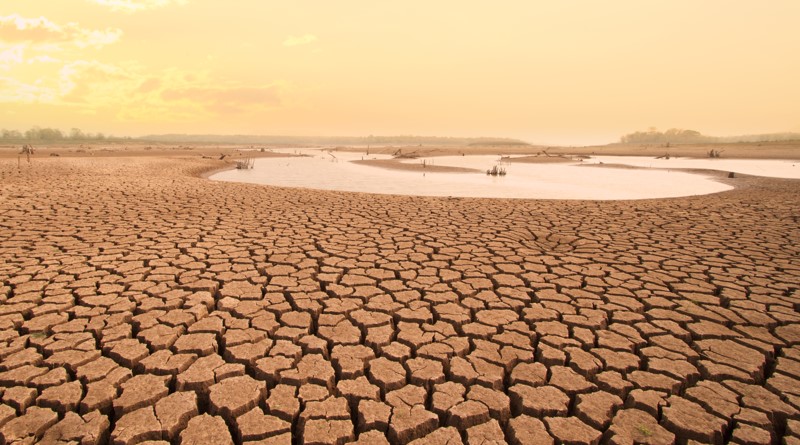
Shifting rainfall patterns could put water resources and agriculture under increasing strain in coming decades due to rising global temperatures in some of the most affected regions across the world including Southeast Asia, a new study carried by researchers from the University of Michigan in the US has pointed out.
While much attention has focused on how much rain will fall overall, researchers are now highlighting another concern: a growing share of that rain is coming in intense, extreme downpours rather than gentle, steady showers. This change, measured using a new metric called the Extreme Precipitation Dependency Index (EPDI), could reshape how societies manage water, crops, and infrastructure, even if climate targets are met, the study led by Mohammed Ombadi of the university, stated. The team examined global rainfall data from both observations and climate model projections.
The study indicates that, as the planet warms, extreme precipitation events are contributing an increasingly large fraction of annual rainfall. Even under scenarios consistent with the United Nations’ current mitigation goals, the proportion of total precipitation falling on very wet days could rise sharply in many regions.
For areas already experiencing volatile weather, this intensification could have serious implications for flooding, agriculture, and water management.
The researchers developed the EPDI as a way to quantify how much annual precipitation comes from the wettest five per cent of days. By comparing the amount of rain from these extreme events to total annual rainfall, the index provides a clear measure of dependence on heavy downpours, said an official statement.
Observations over recent decades show that many regions are already trending toward higher EPDI values, meaning a growing reliance on extreme events for total rainfall. Climate models suggest this trend will accelerate under warming scenarios, particularly beyond 3°C of global temperature rise.
This uneven distribution of rainfall matters because it affects how water is stored, used, and absorbed by the land.
Steady rains allow soil to recharge, crops to grow consistently, and reservoirs to manage supply effectively. In contrast, concentrated downpours can overwhelm drainage systems, cause flash floods, and leave dry periods between storms.
The African Sahel, Southeast Asia, Northern Australia, and the Amazon basin are highlighted as potential hotspots for rising EPDI. In these areas, climate models project that the fraction of annual rainfall coming from extreme events could increase by 15-20 per cent under 4°C warming.
Observational data suggest that some regions are already seeing increases that outpace model projections, indicating that reality may be moving even faster than anticipated.
The uneven distribution of precipitation is further illustrated by a look at daily rainfall percentiles. The researchers found that while the wettest days are expected to become heavier, the light and moderate rainfall events may actually decline in some areas.
In practical terms, this means that farmers and water managers may face longer dry spells punctuated by intense rainstorms, a combination that complicates both irrigation planning and flood prevention.
One of the most vulnerable sectors is rain-fed agriculture, which depends entirely on natural rainfall rather than irrigation.
Using high-resolution satellite data, the team estimated that at 1.5–2°C warming, only a small fraction of rain-fed croplands (around 4-15 per cent) would experience large increases in EPDI. But at higher warming levels, the picture changes dramatically: 54 per cent of rain-fed cropland could see significant increases in extreme rainfall at 3°C, and nearly 96 per cent at 4°C.
These crops, often grown in low-income countries across Africa, Asia, and South America, may face reduced yields, higher vulnerability to flooding, and greater economic disruption, the study said.